On this page
Key facts: Compression flossing improves range of motion by compressing tissue during movement, then delivering a rapid blood flush on release. Kelly Starrett popularised the approach — he calls it “voodoo floss” — for knees, hamstrings, and IT bands. Wrap at ~50% tension, move for 1–2 minutes, unwrap, and retest. Studies on compression garments and flossing show acute ROM gains of 6–10° in knee flexion in a single session.
Origins: Hartzell → Starrett
Compression flossing started with Dick Hartzell’s Jump Stretch bands and was battle-tested by powerlifters at Westside Barbell (Louie Simmons) who would duct-tape hamstrings before squats. Kelly Starrett refined the approach into a repeatable “voodoo floss” method — Jesse Burdick joked it was like magic, and the name stuck.
Flossing is not blood-flow restriction training. Instead of chasing metabolic stress, it leverages sensory input, tissue sliding, joint mechanics, and a flushing effect when you release the wrap.
How Does Voodoo Floss Work?
Under tension and overlap, the band compresses tissue, then movement drives layers to slide and glide. On release, a rapid blood rush delivers an analgesic effect and rehydrates the area. Expect immediate — yet transient — improvements in range of motion, especially for knees, hamstrings, and IT bands.
A 2018 study by Driller & Overmayer (Physical Therapy in Sport) found ankle compression flossing produced significant ROM gains versus control, and the mechanism translates to knees: compression normalises joint mechanoreception, frees fascial adhesions, and improves synovial fluid distribution. The effect is acute — roughly 5–15 minutes — which is why you wrap immediately before training or competition, not hours before.
Starrett’s priority: move the wrapped joint through full and novel ranges, not just easy reps. Deep squats, lunges, lateral shifts, and rotations create the biggest mobility payoff.
Knee Wrap & Movement Protocol (Kelly Starrett)
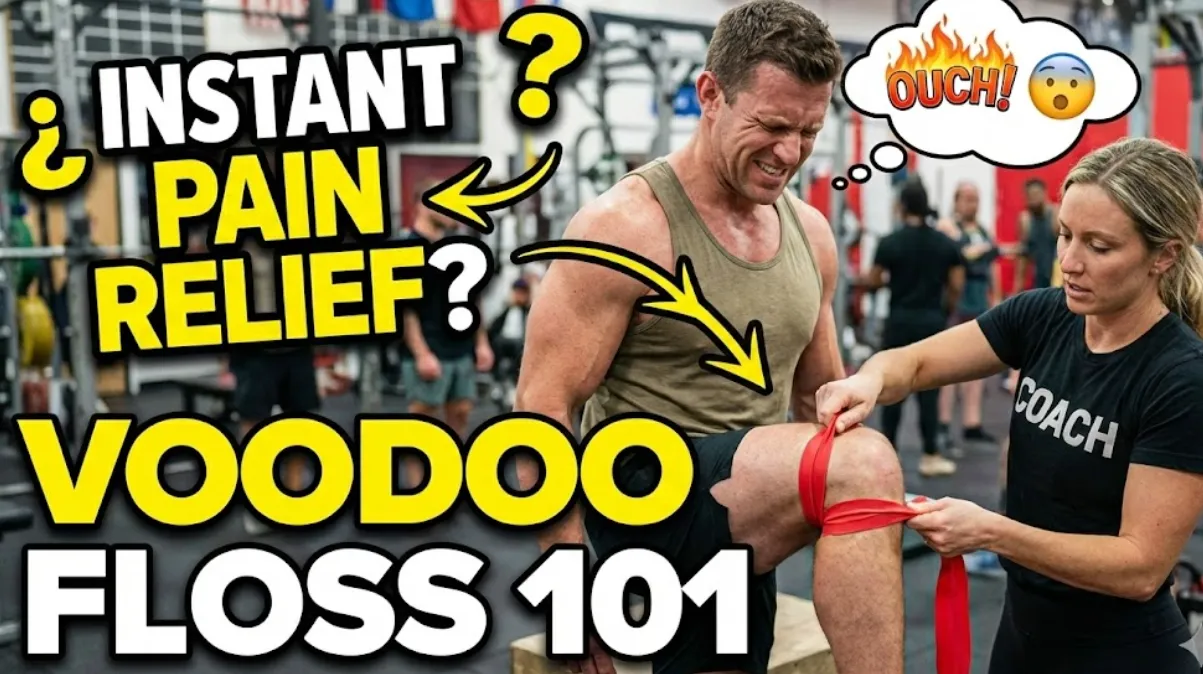
- Wrap with ~50% tension and ~50% overlap, starting below the knee and spiraling upward; finish with a tuck.
- Move immediately for 1–2 minutes: deep squats, split squats, lateral lunges, knee rotations, calf/hamstring flossing, and ankle rocks.
- Release, then retest a key position (e.g., knee flexion depth, dorsiflexion in a lunge). Note: better, same, or worse?
Safety & Red Flags
Stop immediately if you feel numbness or tingling. Keep total wrap time under 2–3 minutes. Avoid during active competition. Contraindications: DVT, severe circulatory issues, uncontrolled hypertension, pregnancy, and latex allergy.
Use lower pressure for best results (around 50% tension). Higher, tourniquet-level pressure is unnecessary and counterproductive.
Band Choices & Test/Retest
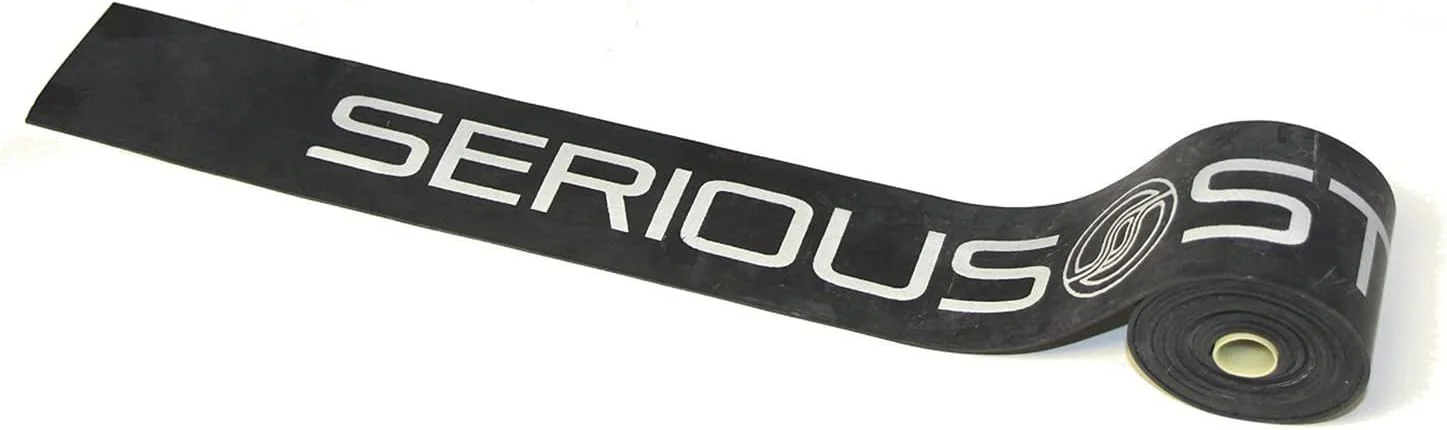
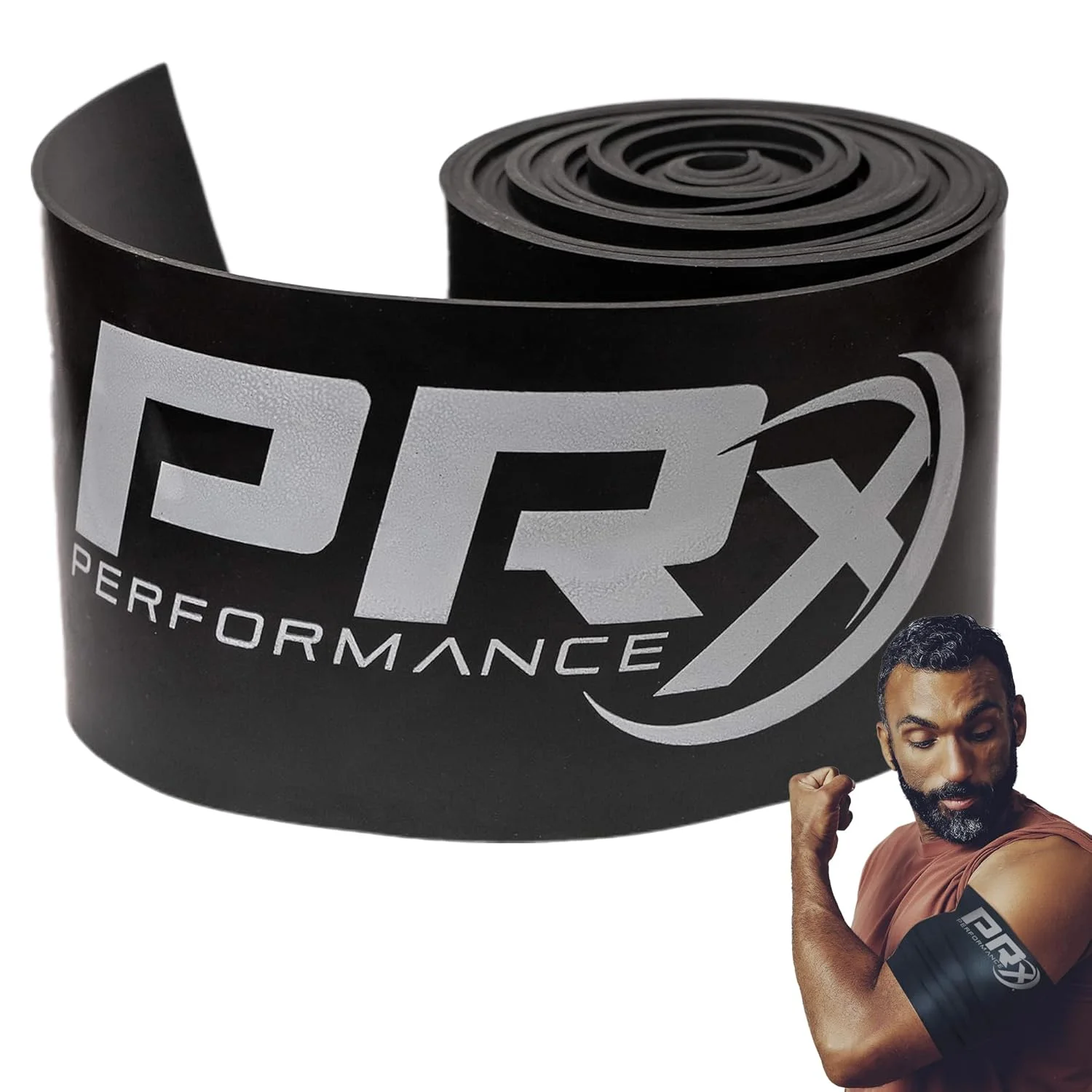
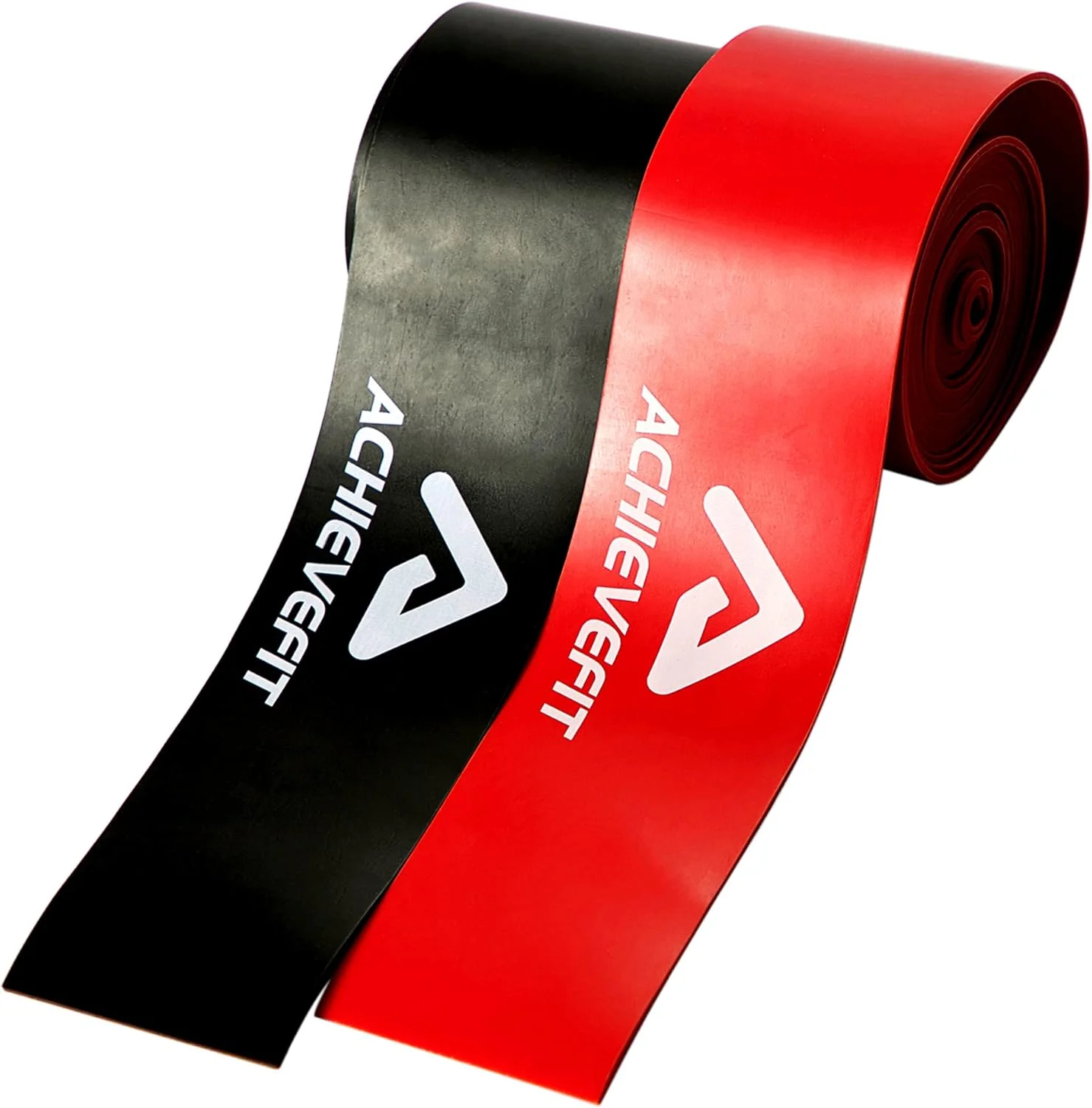
Thinner “cuttier” bands shear tissues and restore sliding surfaces; wider bands are better for decongesting swollen knees by compressing lymphatic flow. Always finish with a quick retest to confirm the change before your next set.
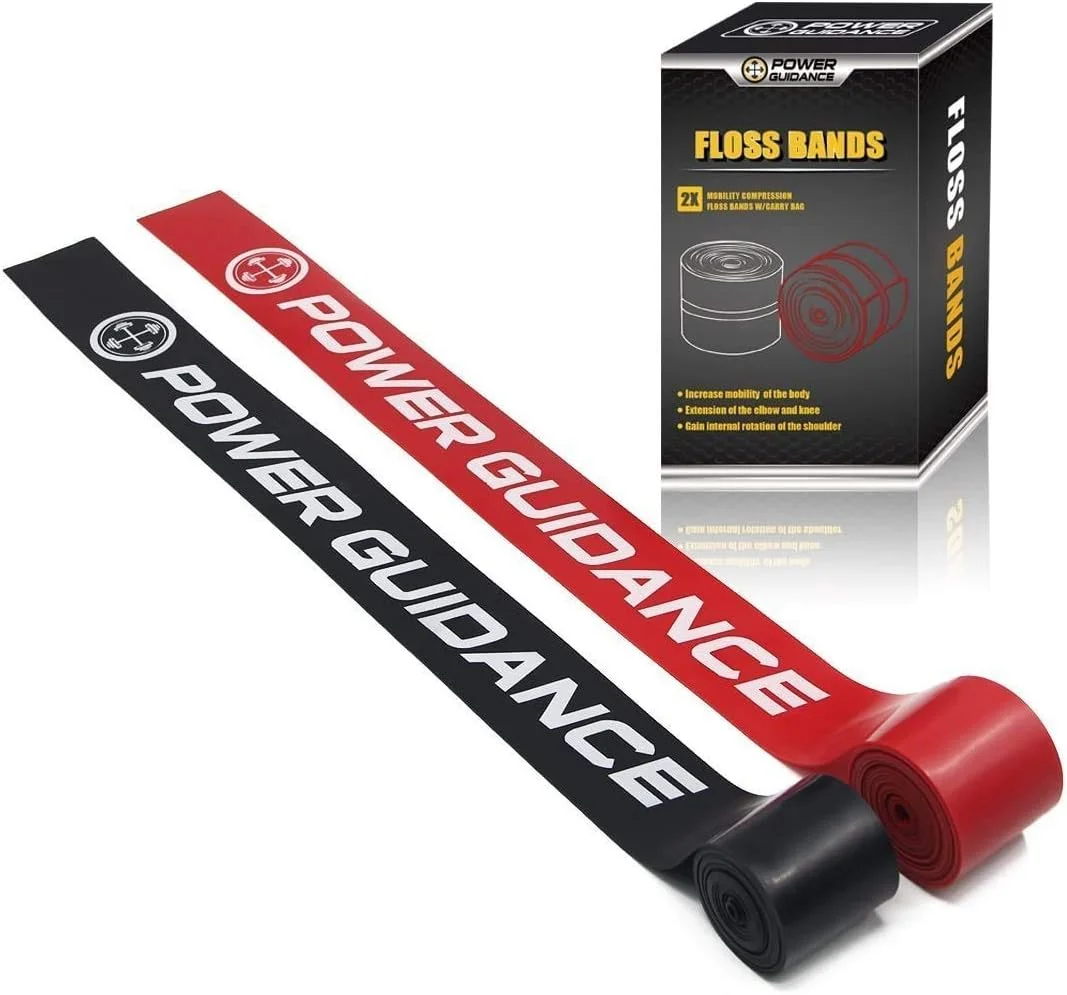
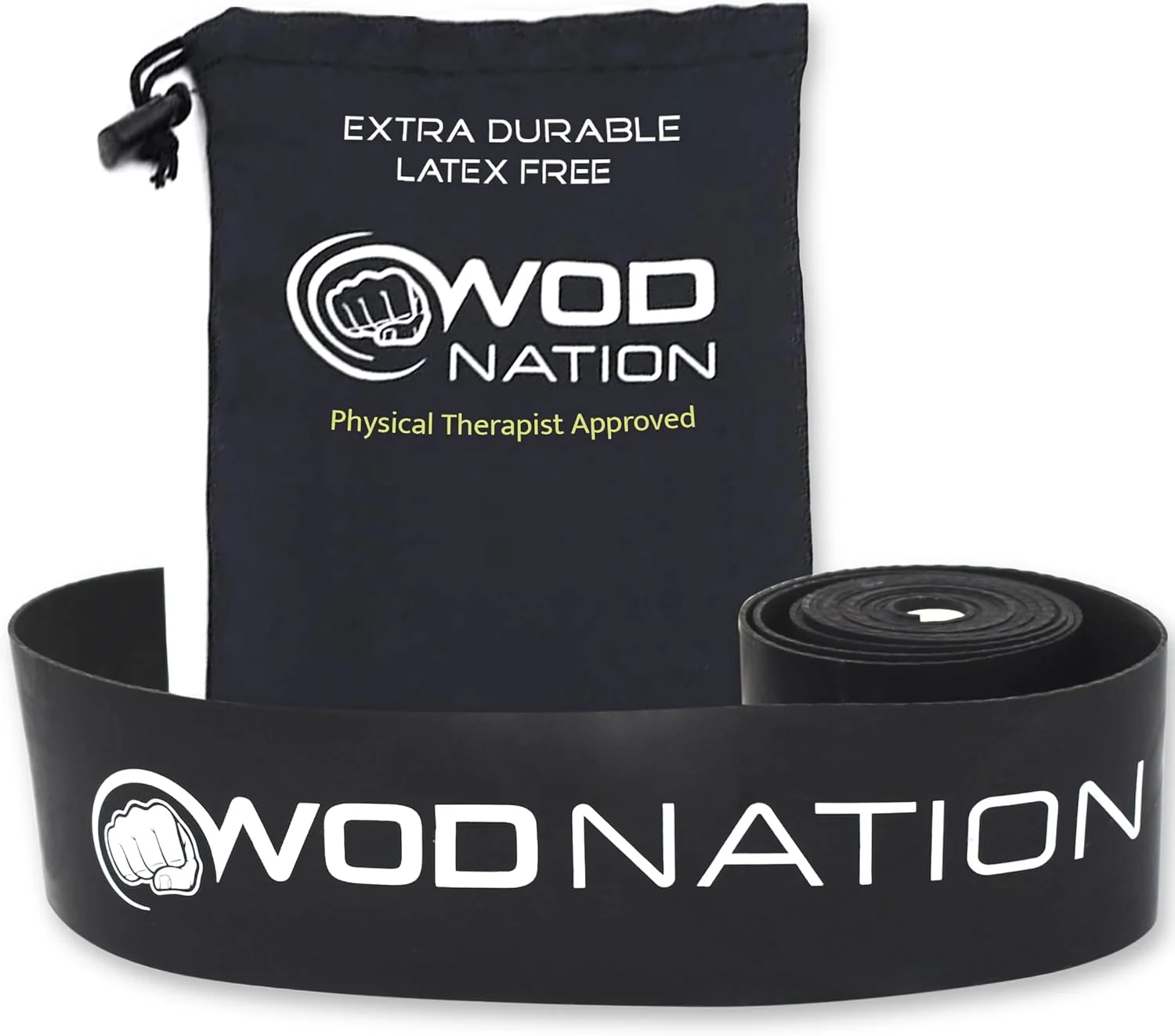
Popular options people search for: WOD Nation floss bands, Power Guidance floss bands, mobility compression floss bands for knees and hamstrings, and voodoo floss IT band wraps. See the picks below.
Movement Over Comfort: Explore End Ranges
Starrett’s core rule: don’t just stand and do easy air squats. Under compression, drive the joint through full and novel ranges — deep squats, lunges in every direction, lateral shifts, rotations, ankle rocks, and calf/hamstring flossing. Movement plus compression restores sliding surfaces and joint mechanics.
Simple tweaks create a bigger stimulus. Elevating the front foot in a lunge (rear foot on the floor) forces the back hip and quad into deep extension, exposing positions ground-level lunges miss. Use these variations to challenge every vector your knee needs.
Wrap Rules & Immediate Feedback
Wrap with ~50% tension and ~50% overlap; tuck the end. Move for about two minutes, then unwrap and retest your target position. The key question: “Better, the same, or worse?” If better, keep it; if not, adjust your drill.
The rapid blood rush on release often delivers an analgesic effect — pain eases, letting you train better positions. If you lose sensation, stop and re-wrap lighter.
Build Resilience, Not Perfection
“The goal is always movement… If there’s one person in the world who can buffer changes in their joints and they’re pain-free, that means we all can have that level of function.” — Kelly Starrett
Flossing is a low-cost, anywhere tool for knee pain, hamstring tightness, or IT band stiffness. By managing tissue congestion, restoring glide, and improving mechanics, you can move pain-free and keep training hard.
Frequently Asked Questions
How long should you voodoo floss your knee?
Keep total wrap time to 1–2 minutes of active movement, never exceeding 3 minutes. Remove the band immediately if you feel numbness, tingling, or sharp pain. Most practitioners do 1–2 rounds per session.
Does voodoo flossing work for IT band pain?
Yes. Wrapping just above and over the knee compresses the lateral structures and drives sliding between the IT band, vastus lateralis, and underlying fascia. Combine with lateral lunges and knee rotations under compression for the best effect. A thinner 'cuttier' band shears tissue layers more effectively for IT band work.
How much tension should I use when wrapping my knee with a floss band?
About 50% of the band's maximum stretch is the standard guideline from Kelly Starrett. Higher tourniquet-level pressure is unnecessary and counterproductive. Overlap each pass by approximately 50% as you spiral from below the kneecap upward.
Can I voodoo floss my knee if I have a meniscus injury?
Consult a qualified healthcare professional before flossing any injured joint. Compression flossing is contraindicated during the acute phase of injury. DVT, severe circulatory issues, uncontrolled hypertension, and active inflammation are absolute contraindications.