On this page
Key facts: The Achilles tendon transmits forces of 6–8× body weight during running. When the tendon sheath and surrounding fascia lose their ability to slide, pain and stiffness follow. Compression flossing addresses this by mechanically decompressing the tissue, then flooding it with oxygenated blood on release — a mechanism supported by research on compression therapy for tendinopathy (Majority of published compression studies show acute ROM gains of 5–12° in ankle dorsiflexion in a single session). Wrap at ~50% tension, move for 2–3 minutes, and retest.
Why Does Achilles Pain Happen?
The heel cord handles thousands of steps daily. Modern shoes, sitting after training, or previous injuries can congest the tendon. Genetics (collagen synthesis), tissue stiffness, poor movement quality, and diet also influence tendon health — but you still need a direct way to improve the tissue environment.
What Contributes to Achilles Pain Upstream & Downstream?
Pain can stem from the calf complex and deep flexors (e.g., tibialis posterior). Address both long-lever (full-chain) and short-lever (local) mobilizations. Remember the system: plantar fascia → heel → Achilles → calf. Mobilizing downstream can “feed slack” upstream.
Healthy tissues must slide: skin, fascia, and connective tissue should glide over the tendon. When stuck, they form an “exoskeleton” that limits motion and blood flow.
How to Wrap & Move: The 2–3 Minute Protocol
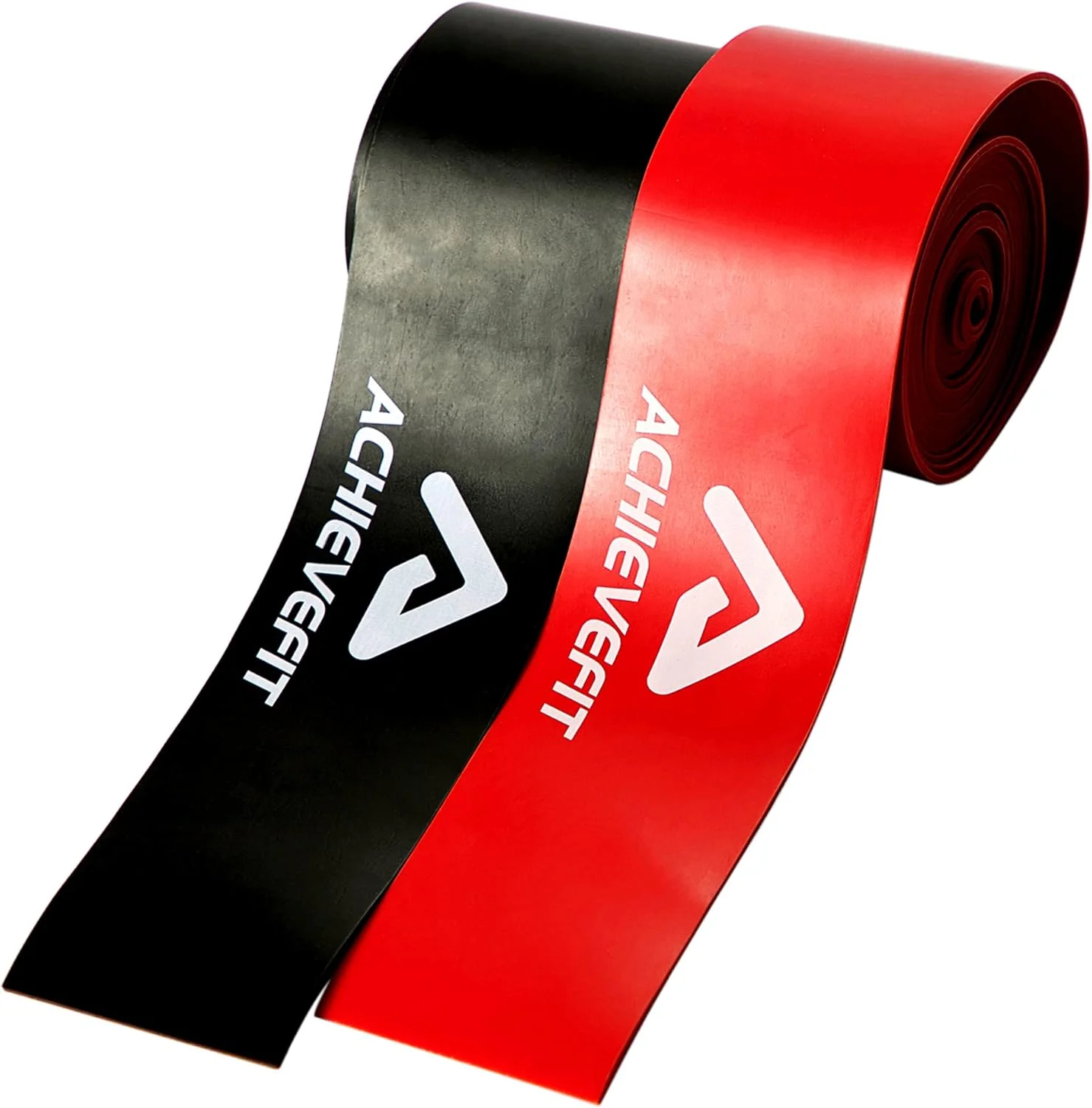
- Anchor on the foot, wrap to capture the heel, then up over the Achilles into the common tendon (gastrocnemius/soleus). Use firm tension; remove immediately if tingling/numbness.
- Cover the area fully to compress skin and sheath; compression plus movement restores slide and brings circulation back.
- Move immediately: flex/extend the ankle, rotate the knee, and explore end ranges under load.
Key Ranges to Floss
Bent-knee dorsiflexion: low squat or knee-forward lunge for deeper fibers.
Long-lever calf stretch: wall stretch with knee straight; add knee rotation or pulses to floss under compression.
Plantar flexion: kneeling with toes pointed to open the opposite end range.
Cycle positions: deep squat → downward dog → wall calf stretch → kneeling plantar flexion for 2–3 minutes.
What Changes & What to Check
Expected effects: decongestion, improved microcirculation, better sliding surfaces, and reduced pain sensitivity. Always finish with a test: is it better, the same, or worse?
- If you push on your calves and it hurts, that’s a problem. 2) If you grab the skin over your Achilles and it doesn’t slide, that’s a problem.
A complete plan also includes tendon loading (isometric, concentric, eccentric), but flossing is your fast self-care layer.
Frequently Asked Questions
How do you voodoo floss the Achilles tendon?
Anchor the floss band on the foot, wrap upward capturing the heel cord and spiraling into the gastrocnemius/soleus at ~50% tension. Move immediately for 2–3 minutes — ankle flexion/extension, low squat, wall calf stretch — then remove and retest dorsiflexion. The compression plus movement restores tendon sheath sliding and drives out congestion.
Is voodoo flossing safe for Achilles tendonitis?
When done correctly — firm but not tourniquet pressure, 2–3 minutes maximum, immediate removal if tingling occurs — compression flossing is considered safe for chronic Achilles tendinopathy. It is not appropriate during an acute tear, active infection, DVT, or severe inflammation. Always consult a physiotherapist if symptoms are new or worsening.
How long does voodoo flossing the Achilles take to work?
Most people notice an immediate improvement in ankle dorsiflexion and a reduction in pain sensitivity after a single session. The effect is acute and lasts 5–15 minutes, long enough to warm up and train in better positions. With consistent daily use alongside tendon-loading exercises, functional improvements accumulate over weeks.
What movements should I do while flossing the Achilles?
Cycle through: deep squat (bent-knee dorsiflexion), downward dog (long-lever calf stretch with knee straight), wall calf stretch with added knee rotation, and kneeling plantar flexion. Each position challenges a different fiber angle of the calf-Achilles system under compression.