On this page
Key facts: The elbow is one of the most nerve-dense joints in the body — the ulnar, radial, and median nerves all pass close to the surface. For that reason, compression flossing here requires more attention to nerve symptoms than any other wrap site. Done correctly (distal to proximal, ~50% tension, 2 minutes active movement), flossing improves joint mechanics and reduces pain by mechanically freeing ischemic tissue and improving local blood flow. Research on compression flossing published in Physical Therapy in Sport (2019) found significant ROM gains in wrist extension after a single elbow flossing session in subjects with elbow stiffness.
Why Should You Floss the Elbow?
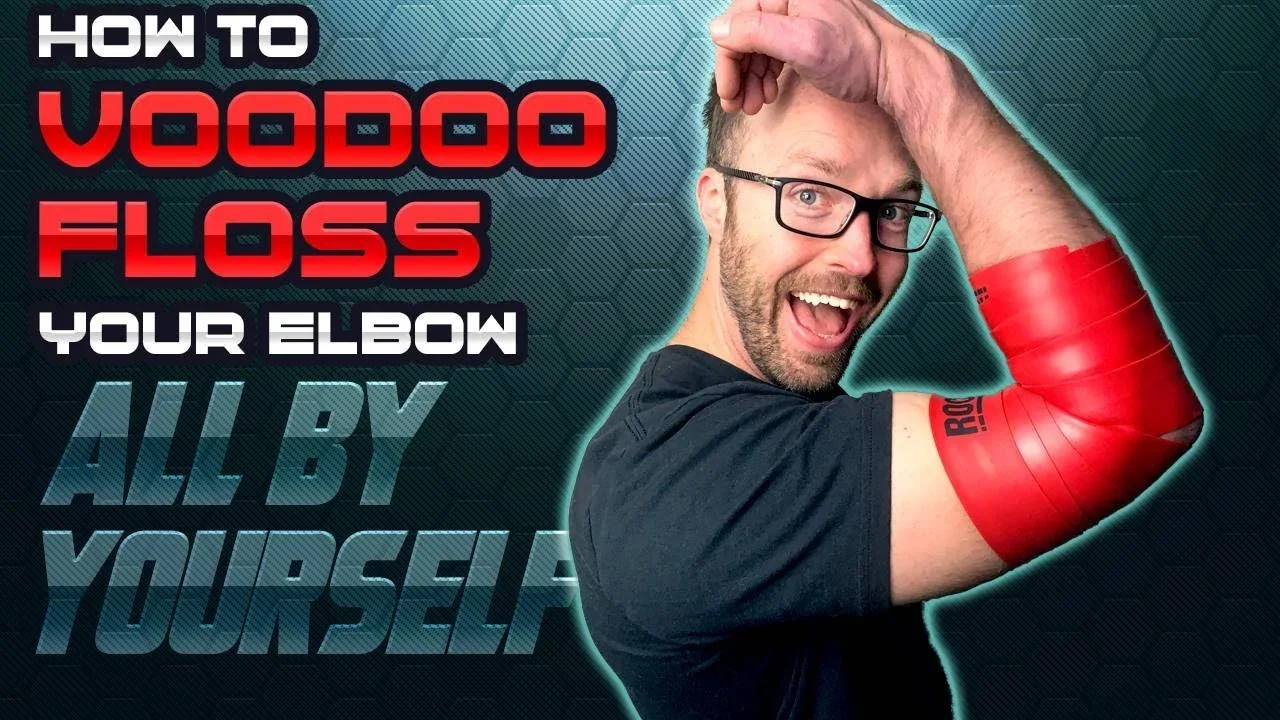
Compression flossing (voodoo flossing) is a self-care technique to improve tissue health and mobility around the elbow. It applies compressive force plus movement, adding shearing forces you can’t get otherwise, to free “gunked up” or ischemic tissue and improve dynamics for tendons, muscles, and nerves. Research shows tangible ROM and performance benefits.
The goal: create a healthier environment for these tissues to move and operate within—even though the exact mechanisms are still being studied.
Universal Principles
- Check for Latex Allergies: Most floss bands are latex; use latex-free if needed.
- Wrap Distal to Proximal: Start below the elbow and wrap toward the heart—healthier for your vessels.
- Mind the Nerves: Pins and needles mean nerve compression; back off tension or re-wrap. If it persists, skip the drill.
How to Wrap the Elbow Step-by-Step
Use a 2-inch band; brands are functionally similar — control tension. Classic advice keeps the roll facing up, but for self-wrapping, let the band curl toward the skin to anchor the first wrap.
- Anchor the Band: Pin the end a few inches below the elbow with just enough tension to secure it.
- Overlap and Pull: From the second wrap onward, overlap ~50% with ~50% stretch (adjust as needed).
- Wrap Across the Joint: Continue wrapping upward across or beside the olecranon for comfort.
- Secure the End: Tuck the tail under a wrapped section once the target area is covered—you don’t need the whole band.
Performing Movements While Flossing
Once the band is secure, spend about two minutes performing movements. There is no single “right” way—explore what feels effective.
Nerve Flossing: Extend your arm out, bend elbow and tilt your head away, then straighten and tilt your head toward. Mobilizes nerves and surrounding tissues.
Accessory Movements (Starrett-style): Pin your hand on a table or floor. With your palm pushed back (wrist extended), internally/externally rotate the shoulder to challenge flexors. With your wrist bent forward (flexed), repeat the twisting motions to challenge extensors.
These movements, combined with compression, create powerful shearing to free tissue. Stop if tingling persists.
Unwrapping and Aftermath
After about two minutes (or your tolerance limit), pull the tucked end and let the band unravel quickly. Expect redness from the blood rush—normal and expected. The area should feel looser and more mobile. Retest: better, the same, or worse? If worse, re-wrap lighter or adjust drills.
Frequently Asked Questions
How do you put a floss band on your elbow?
Anchor the band a few inches below the elbow with light tension to secure it. From the second wrap onward, overlap ~50% with ~50% stretch, spiraling upward across the joint. Tuck the tail under a wrapped section once the target area is covered. The classic advice is roll-facing-up, but for self-wrapping, letting the band curl toward the skin on the first pass anchors it without slipping.
How long should you voodoo floss your elbow?
Spend approximately 2 minutes moving while the band is applied, then remove immediately. If you feel pins and needles at any point, remove the band and re-wrap at lighter pressure. Never leave it on more than 3 minutes or without active movement.
Does voodoo flossing help tennis elbow?
Yes — lateral epicondylalgia (tennis elbow) responds well to compression flossing. The combination of compression and accessory wrist movements creates shearing forces that free ischemic tissue around the extensor tendons. Combine with nerve flossing (extending the arm with wrist extension) for broader coverage. A 2022 case series showed meaningful pain reduction with a 4-week compression flossing protocol in chronic lateral elbow tendinopathy.
Is voodoo flossing the elbow safe?
Compression flossing is safe when done correctly: wrap distal to proximal (below to above the elbow), check for latex allergy, stay under 3 minutes, and stop immediately for tingling. It is not suitable during acute injury, immediately post-surgery, or for those with clotting disorders or uncontrolled hypertension.