On this page
Why Floss the Elbow
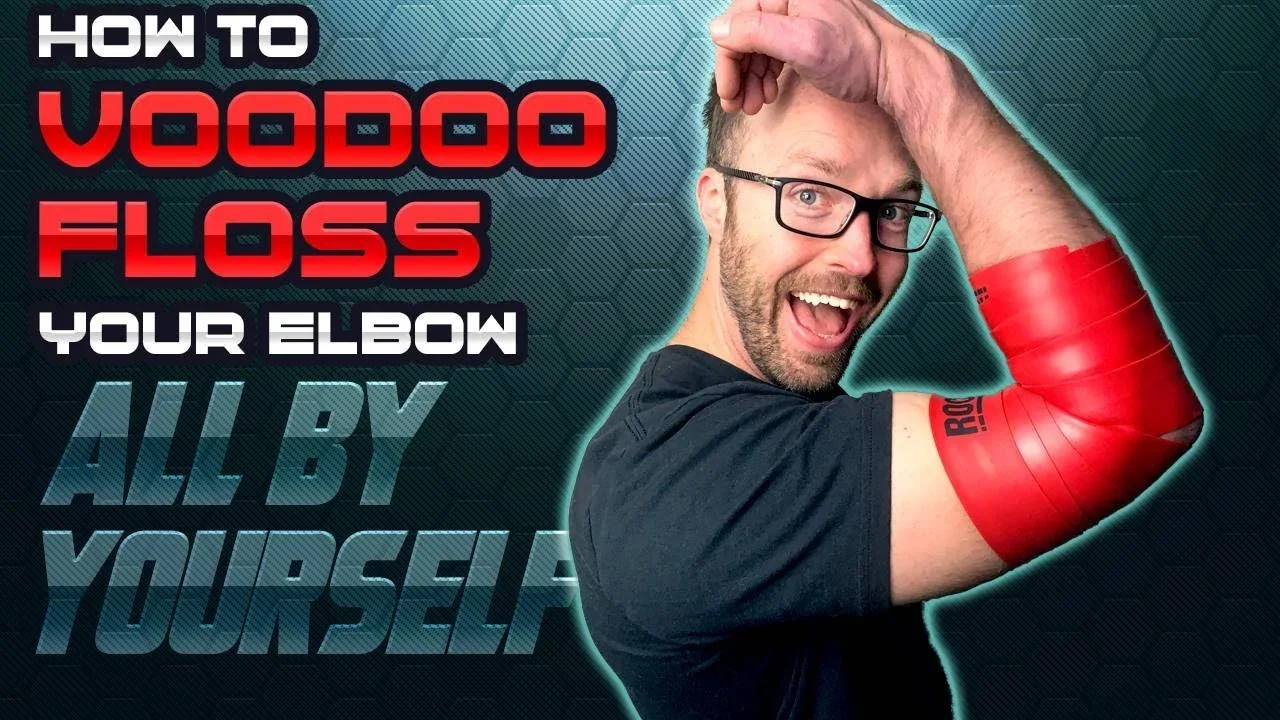
Compression flossing (voodoo flossing) is a self-care technique to improve tissue health and mobility around the elbow. It applies compressive force plus movement, adding shearing forces you can’t get otherwise, to free “gunked up” or ischemic tissue and improve dynamics for tendons, muscles, and nerves. Research shows tangible ROM and performance benefits.
The goal: create a healthier environment for these tissues to move and operate within—even though the exact mechanisms are still being studied.
Universal Principles
- Check for Latex Allergies: Most floss bands are latex; use latex-free if needed.
- Wrap Distal to Proximal: Start below the elbow and wrap toward the heart—healthier for your vessels.
- Mind the Nerves: Pins and needles mean nerve compression; back off tension or re-wrap. If it persists, skip the drill.
Step-by-Step Wrap
Use a 2-inch band; brands are functionally similar—control tension. Classic advice keeps the roll facing up, but for self-wrapping, let the band curl toward the skin to anchor the first wrap.
- Anchor the Band: Pin the end a few inches below the elbow with just enough tension to secure it.
- Overlap and Pull: From the second wrap onward, overlap ~50% with ~50% stretch (adjust as needed).
- Wrap Across the Joint: Continue wrapping upward across or beside the olecranon for comfort.
- Secure the End: Tuck the tail under a wrapped section once the target area is covered—you don’t need the whole band.
Performing Movements While Flossing
Once the band is secure, spend about two minutes performing movements. There is no single “right” way—explore what feels effective.
Nerve Flossing: Extend your arm out, bend elbow and tilt your head away, then straighten and tilt your head toward. Mobilizes nerves and surrounding tissues.
Accessory Movements (Starrett-style): Pin your hand on a table or floor. With your palm pushed back (wrist extended), internally/externally rotate the shoulder to challenge flexors. With your wrist bent forward (flexed), repeat the twisting motions to challenge extensors.
These movements, combined with compression, create powerful shearing to free tissue. Stop if tingling persists.
Unwrapping and Aftermath
After about two minutes (or your tolerance limit), pull the tucked end and let the band unravel quickly. Expect redness from the blood rush—normal and expected. The area should feel looser and more mobile. Retest: better, the same, or worse? If worse, re-wrap lighter or adjust drills.